 💙 Support our website
13
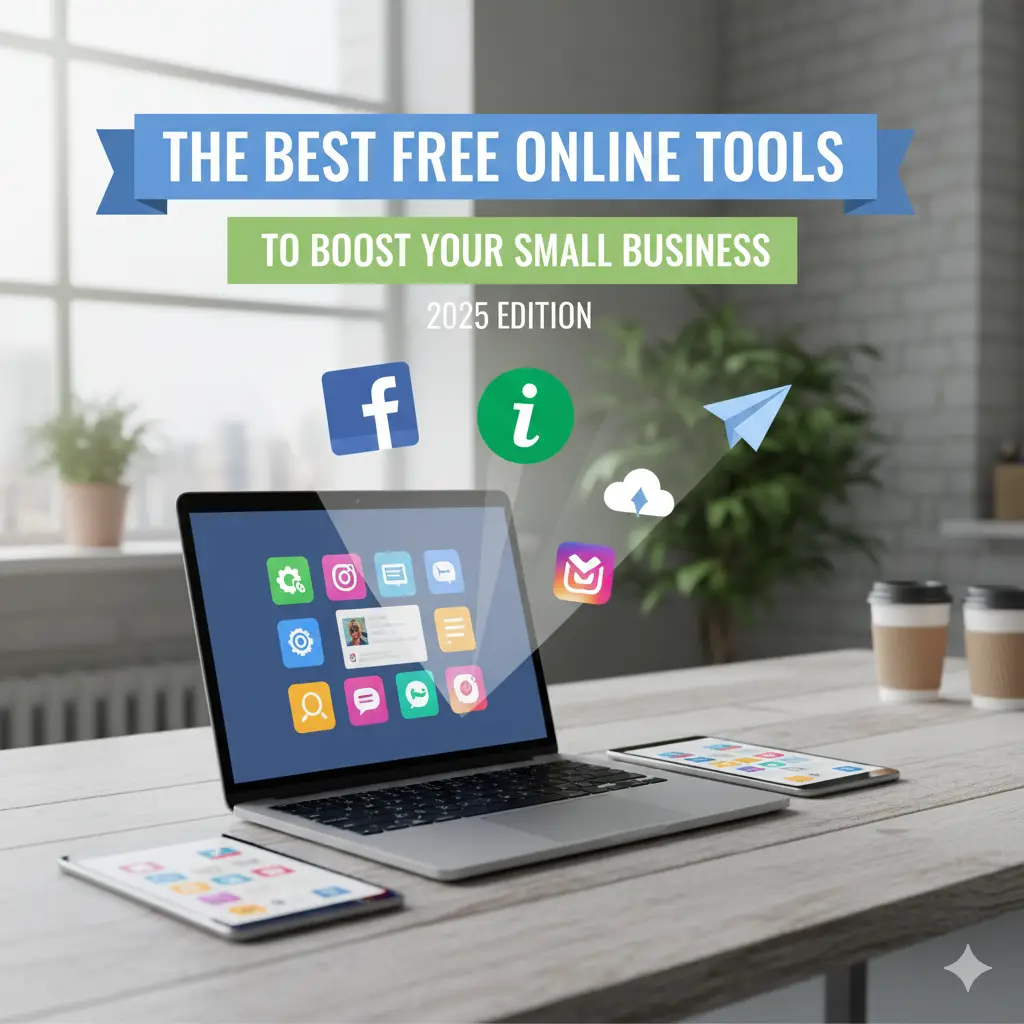
The Best Free Online Tools to Boost Your Small Business
Maximize your business performance with the best free online tools for small business owners — productivity, marketing, and finance in one list.
Small business life moves fast. One minute you’re replying to customer messages, and the next you’re designing a promo post, fixing your website, sending invoices, and wondering where the day went. The solution isn’t “work harder.” It’s using the right free tools — the kind that make you look more professional, move faster, and stay organized without paying enterprise prices. 💼⚡
This guide is a practical, no-fluff list of free online tools that actually help small businesses grow. Plus, each tool includes quick “how to use it” tips so you can get real results instead of just saving another link.
Table of Contents
- Branding & Design Tools 🎨
- Content, Copywriting & SEO Tools ✍️🔎
- Productivity & Project Management Tools ✅
- Communication & Customer Support Tools 💬
- Marketing, Social Media & Email Tools 📣
- Website, Tech & Security Tools 🌐🛡️
- AdSense-Friendly Layout Rules (Quick Checklist) 🧩
- Smart “Starter Stack” (Pick Your 5) 🧠
1) Branding & Design Tools 🎨
Canva (Free Plan)
If you’re not a designer, Canva is your shortcut to “this looks legit.” Use it for social posts, flyers, menus, pitch decks, posters, and basic brand assets.
How to make it work (fast):
- Create a mini brand kit: pick 2 fonts + 3 colors and stick to them. Consistency builds trust.
- Build 3 reusable templates: one for promos, one for tips/education posts, one for testimonials.
- Export the right format: PNG for social, PDF for print, MP4 for simple animations.
Punchy mindset: your visuals don’t need to be fancy. They need to be clear, consistent, and recognizable.
2) Content, Copywriting & SEO Tools ✍️🔎
Google Trends
Want to create content people are already searching for? Google Trends helps you spot what’s rising, what’s seasonal, and what’s fading.
Use it like a strategist:
- Validate content topics before writing (why guess?).
- Compare two ideas (example: “online booking” vs “appointment scheduling”).
- Plan seasonal posts: sales, holidays, back-to-school, local peak periods.
AnswerThePublic (Limited Free Searches)
This tool is a goldmine for blog ideas because it shows real questions users ask. Those questions can become:
- blog posts
- FAQ sections
- service pages
- YouTube video scripts
- even ad copy angles
Quick win: Pick one keyword (like “home cleaning service”), then turn the best questions into a “People Also Ask” style FAQ on your site.
Grammarly (Free)
Great writing sells. Grammarly cleans up grammar, clarity, and tone so you sound professional—even if English isn’t your first language.
Pro tip: Don’t aim for “perfect.” Aim for clear and confident. Short sentences convert.
3) Productivity & Project Management Tools ✅
Google Drive + Docs + Sheets (Free)
This trio is the backbone of organized businesses. You can manage documents, track projects, store contracts, share folders, and collaborate in real time.
Practical setups that save hours:
- Create a “Business HQ” folder: Admin / Sales / Marketing / Operations / Finance.
- Use Sheets to track: leads, orders, content calendar, expenses, inventory.
- Make a “Standard Operating Procedures” doc (SOP): how you onboard clients, handle refunds, publish posts.
Trello (Free Plan)
Trello is simple: boards, lists, and cards. That’s why it works. It turns chaos into something you can see.
Example board for content:
- Ideas → Writing → Designing → Scheduled → Published
Make it 2x more useful: Add a checklist inside each card (title, keywords, CTA, internal links, image, publish date). Suddenly your process becomes repeatable.
4) Communication & Customer Support Tools 💬
WhatsApp Business
If your customers live on WhatsApp, this is non-negotiable. It helps you respond faster and look more professional.
Features that matter:
- business profile (hours, address, website)
- quick replies (save time)
- labels (new lead, paid, follow-up, pending)
Quick script tip: Create 3 ready-to-send replies: pricing, availability, and “next steps.” Faster replies often win the sale.
Zoom or Google Meet (Free)
Use video calls for higher-trust conversations: consultations, demos, onboarding, supplier meetings.
Tiny improvement, big impact: Send a short agenda before the call and end with: “Here are the next 2 actions.” That’s how you look organized and premium.
5) Marketing, Social Media & Email Tools 📣
Buffer (Free Plan)
Posting manually every day is a trap. Buffer lets you schedule content so marketing happens even when you’re busy.
Simple weekly routine:
- 1 hour: create posts
- 15 minutes: schedule
- Done ✅
Content strategy that works:
- 40% education (tips, how-tos)
- 30% trust (testimonials, behind-the-scenes)
- 30% offers (promos, services, booking CTA)
Mailchimp (Free Tier)
Email marketing is still one of the best ROI channels because you’re not at the mercy of algorithms.
Easy small business email plan:
- 1 welcome email (what you do + how to buy/book)
- 1 weekly or biweekly newsletter (tips + offer)
- 1 monthly “best of” roundup
Pro tip: Your email doesn’t need to be long. One useful tip + one clear CTA is enough.
6) Website, Tech & Security Tools 🌐🛡️
Your website is your digital storefront. And the moment something breaks (domain, DNS, SSL, email routing), you don’t want to panic—you want to diagnose.
DNS Lookup Tool (on theskil.com)
A DNS lookup tool helps you check DNS records such as:
- A record (where the domain points)
- CNAME (subdomain mapping)
- MX (email delivery)
- TXT (verification + security records like SPF/DKIM/DMARC)
When it’s useful:
- Your domain points to the wrong hosting provider
- Email stops arriving (MX problems)
- You need to verify ownership for third-party services
- You’re setting up a new website and something isn’t resolving
Practical checklist for DNS troubleshooting:
- Confirm you edited DNS at the correct place (registrar vs hosting DNS)
- Check record type and value (A/CNAME/MX/TXT)
- Wait for propagation (some changes take time)
- Re-check using a DNS tool to confirm what the internet sees
7) AdSense-Friendly Layout Rules (Quick Checklist) 🧩
If your article is monetized, you want ads that earn without ruining UX (or risking policy issues). Here are safe, clean rules to follow on the page:
- Keep 150px minimum between ad blocks and buttons/CTAs
- Maintain at least 60% content and max 40% ads
- Limit to maximum 3 ad blocks per page
- Add clear labels above ad blocks: “Publicité” or “Annonces”
- No pop-ups or modal ad windows
- Make sure ads are responsive (mobile + desktop)
Tip for layout: Place ads between sections, not right next to “Buy,” “Download,” “Check,” or other action buttons. Keep your CTAs clean and clearly separated.
8) Related Tools (Internal Links) 🔗
Add internal links to keep users on theskil.com longer (great for SEO and helpful for visitors). Here are relevant “related tools” ideas you can link to:
Final Take: Build Your “Small Business Toolkit” in 30 Minutes 🧠⚡
Don’t download everything. Don’t chase shiny tools. Pick a simple stack that covers the essentials:
- Design: Canva
- Organization: Google Drive + Trello
- Visibility: Google Trends + AnswerThePublic
- Growth: Buffer + Mailchimp
- Website health: DNS Lookup Tool (theskil.com)
That’s it. With those, you can look professional, market consistently, and fix basic web issues without calling a developer every time.
Contact
Missing something?
Feel free to request missing tools or give some feedback using our contact form.
Contact Us